25th Annual On-site CCB Workshop 2024
July 22 – 24, 2024
CCAM at UConn Health
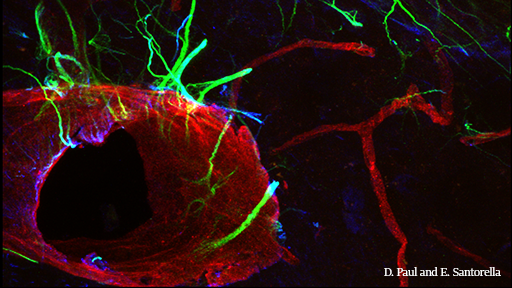
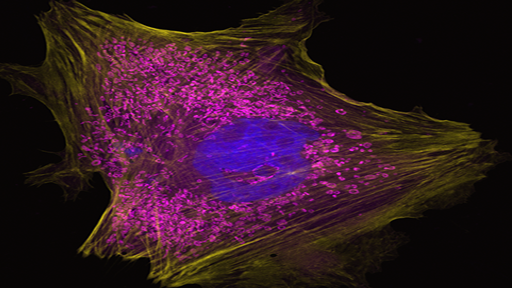
Is developing new approaches for in vivo measurements and manipulation of molecular events within the cell, and new computational approaches for organizing such data into quantitative models.
CCAM integrates new microscope technologies for making quantitative in vivo live cell measurements with new physical formulations and computational tools that will produce spatially realistic quantitative models of intracellular dynamics.
To investigate the relationships between experimental and computational worlds, we use a tripartite approach described as:
- Measure - develop new tools for measuring spatially resolved dynamic behavior of molecules in cells.
- Model - develop new methods for spatial modeling of biological systems.
- Manipulate - develop new techniques for manipulating the spatial distribution of molecules in living cells.
These three analytical approaches, (measurement, modeling and manipulation) are integrated and interdependent, e.g., models generate predictions that can be validated with new measurements, as well as experimental approaches that manipulate intracellular signals and structures. These approaches allow us to tackle fundamental questions of how the spatial organization of molecules in cell is established and how it is utilized to control cell function. CCAM hosts a confluence of expertise in physics, chemistry, experimental cell biology and software engineering immersed in a biomedical research setting that values interdisciplinary collaborations, and our Training Program in Systems Biology provides a new model for interdisciplinary training in cell biology. CCAM is the home of the Virtual Cell, a computational environment for cell biological modeling developed as a NIH-designated National Resource, and also hosts a variety of projects in biophotonics and live cell microscope imaging methods as well as a state-of-the-art user microscopy facility for nonlinear, confocal, and widefield microscopy.
Inclusivity Statement
CCAM is committed to fostering an inclusive and tolerant research environment. We support students and faculty of all races, religions, ethnicities, differing physical abilities, sexual orientations, and gender identities.
UConn maintains a number of resources to promote inclusivity and to report complaints:
Office of Institutional Equity
Ombuds Office
Dean of Students Office Bias Reporting
Office for Diversity and Inclusion
School of Medicine Office of Multicultural and Community Affairs
Upcoming Events
-
Apr
25
CCAM Seminar Series - Dr. Benjamin Lin 4:00pm
CCAM Seminar Series - Dr. Benjamin Lin
Thursday, April 25th, 2024
04:00 PM
400 Farmington Ave
CCAM Seminar Series
Guest Speaker: Dr. Benjamin Lin
Title: TBD
Contact Information:
More -
Apr
26
CAM Presentation - OPEN 12:00pm
CAM Presentation - OPEN
Friday, April 26th, 2024
12:00 PM - 01:00 PM
Demo Room, R1401
CAM PresentationSpeaker: OPENTitle: TBDMeeting Link: https://uconnhealth.webex.com/meet/pmendes -
May
3
CAM Presentation - Ion Moraru 12:00pm
CAM Presentation - Ion Moraru
Friday, May 3rd, 2024
12:00 PM - 01:00 PM
Demo Room, R1401
CAM PresentationSpeaker: Ion MoraruTitle: TBDMeeting Link: https://uconnhealth.webex.com/meet/pmendes -
May
10
CAM Presentation - Paola Vera-Licona 12:00pm
CAM Presentation - Paola Vera-Licona
Friday, May 10th, 2024
12:00 PM - 01:00 PM
Demo Room, R1401
CAM PresentationSpeaker: Paola Vera-LiconaTitle: TBDMeeting Link: https://uconnhealth.webex.com/meet/pmendes -
May
17
CAM Presentation - Amin Boroomand 12:00pm
CAM Presentation - Amin Boroomand
Friday, May 17th, 2024
12:00 PM - 01:00 PM
Demo Room, R1401
CAM PresentationSpeaker: Amin BoroomandTitle: TBDMeeting Link: https://uconnhealth.webex.com/meet/pmendes
News
- Dr. Agmon’s Cell Systems paper on modeling tumor with Vivarium17 April 2024. Dr. Agmon and his collaborators from Stanford published a Cell Systems paper “Integrating multiplexed imaging and multiscale modeling identifies tumor phenotype conversion as a critical component of therapeutic T cell efficacy” utilizing the software Vivarium to simulate tumor/T cell interactions https://www.sciencedirect.com/science/article/pii/S2405471224000899 Congratulations to Eran Agmon as the co-first author of a paper […]
- Welcome to new CCAM faculty Dr. Sarvenaz Sarabipour!CCAM welcomes the new Assistant Professor Dr. Sarvenaz Sarabipour! Dr. Sarabipour received her PhD in Engineering from Johns Hopkins University and performed her postdoctoral work at Johns Hopkins Institute for Computational Medicine and Department of Biomedical Engineering. Sarvenaz’s research in computational systems biology focuses on developing experimental and computational methods to study mechanisms of signal transduction in cells and tissue. […]
- VCell and COPASI at HARMONY 2024VCell and COPASI were presented at HARMONY 2024 (https://co.mbine.org/author/harmony-2024/) at University College London. Michael Blinov gave a tutorial on VCell, while Frank Bergman (one of COPASI developers) talked about the web version of COPASI running through JavaScript. Other topics discussed include interoperability of multiple standards like SBML, SED-ML and COMBINE archive supported by both VCell […]
- 25th Annual Comp Cell Bio workshopVCell, COPASI and SpringSalad were taught and used for projects at the 25th Annual Computational Cell Biology (CCB) workshop that took place online February 26-28th. The invited talks were given by Yulia Timofeeva (University of Warwick), James P Sluka (Indiana University) and Kevin Janes (University of Virginia). Sixteen participants were selected to work with VCell and COPASI […]
- Dr. Agmon published Cell Reports on restructuring of tumor tissueCongratulations to Dr. Agmon and his collaborators from Stanford for publishing an article in Cell Reports on T cell-mediated curation and restructuring of tumor tissue coordinates an effective immune response. https://www.sciencedirect.com/science/article/pii/S2211124723015061